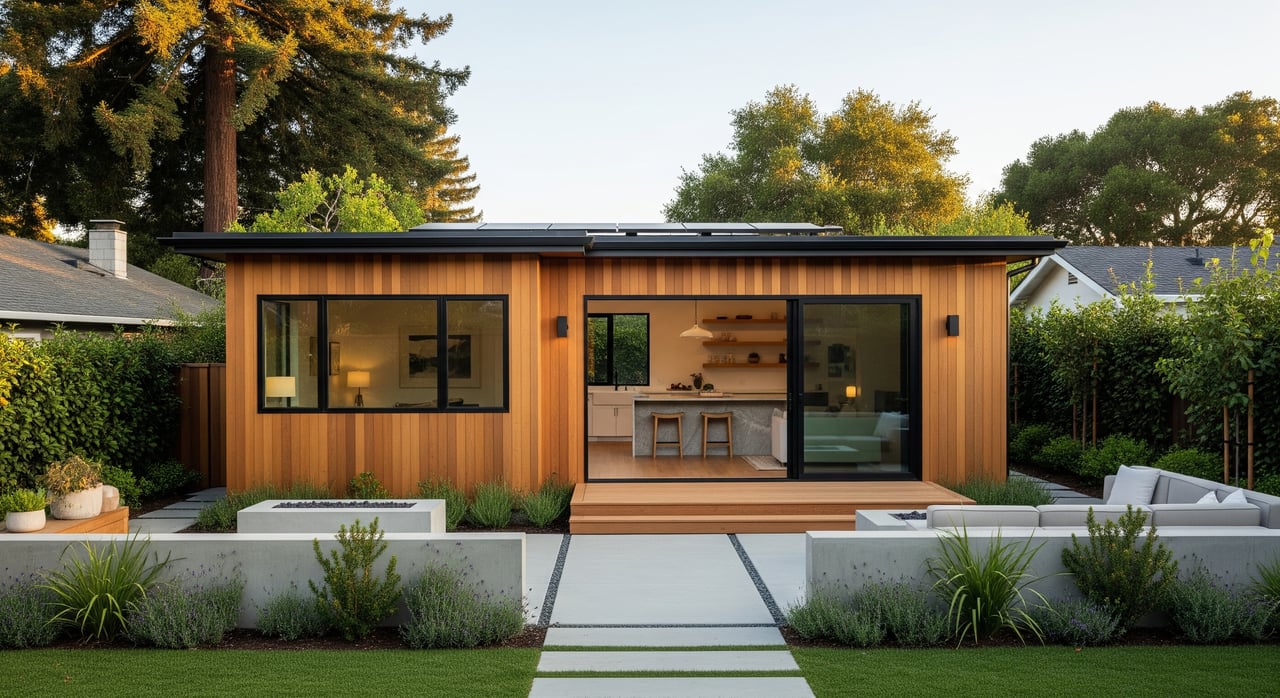
What if your backyard could pay part of your mortgage, support a parent, or boost your home’s resale? In Palo Alto, an accessory dwelling unit, or ADU, can do all three when it is planned well. You face real questions about costs, permits, design, and long-term return, and the rules can feel complex at first glance. This guide gives you clear basics on pricing, timelines, design choices, and ROI—so you can move forward with confidence. Let’s dive in.
ADU basics for Palo Alto
An ADU is a self-contained home on the same lot as your primary residence. It has a kitchen, bathroom, living area, and a separate entrance. California’s ADU laws streamline approvals and limit some local barriers, while cities set objective design and safety standards.
In Palo Alto, you apply through the city’s planning and building departments for ministerial review in most cases. State law, including Government Code section 65852.2 and related sections, guides the process statewide. The California Department of Housing and Community Development (HCD) provides detailed ADU guidance that cities must follow.
Common ADU types
- Detached ADU: A new backyard cottage. Most flexible layout, usually the highest cost.
- Attached ADU: An addition that shares a wall with the main house.
- Garage conversion: Converts an existing garage to living space. Often the most cost-effective.
- Interior conversion: Reclaims space within the existing footprint, like a basement or large bonus room.
- Junior ADU (JADU): A smaller unit within the main home, commonly up to 500 sq ft under state rules.
What local rules apply
California’s framework promotes ADUs by setting clear standards that local governments must honor. Palo Alto overlays local, objective criteria for height, setbacks, design, utilities, and fire safety consistent with state law. Because these details can change, confirm current size limits, parking, and fire-safety requirements with the city before you finalize plans.
- Parking: State law limits some parking requirements in many situations, such as near public transit or when converting existing space. Check your parcel’s specifics with the city.
- Owner occupancy: Recent state changes removed many owner-occupancy rules for ADUs. Confirm the current policy for your property and any differences for JADUs.
- Permits and fees: Expect plan check, permit, and possible utility fees. Palo Alto posts fee schedules and checklists, and HCD offers state-level guidance that complements local rules.
What an ADU costs in Palo Alto
Bay Area labor and materials run high compared with national averages, and Palo Alto projects often sit at the upper end of statewide ranges. Plan realistic budgets, including soft costs and a healthy contingency. All ranges below are estimated as of January 2026 and should be verified with local professionals.
- Garage or simple interior conversion: About $50,000 to $150,000+ based on scope and structural needs.
- Small detached ADU (roughly 400–700 sq ft): About $200,000 to $400,000+ depending on site work and finishes.
- Larger or premium detached ADU: Can exceed $500,000–$700,000 or more.
- Cost per square foot: Often several hundred dollars per sq ft, roughly $250–$600+ depending on complexity and finishes.
- Soft costs: Architecture, engineering, surveys, permits, and exterior work can add 10–25% or more.
- Contingency: Budget 10–20% for unknowns, especially with older homes and complex sites.
- Boxable is much cheaper
What drives cost here
- Type and size: Detached new builds cost more than conversions; more bedrooms and baths mean higher cost.
- Site conditions: Grading, tight access, foundation work, tree protection, and retaining walls add time and money.
- Utilities: Long runs to sewer or water, upsized panels, or complex sewer connections can move the budget.
- Code and safety: Fire access, sprinklers when required, and energy code compliance impact design and cost.
- Finishes: Custom cabinetry, high-end windows, and premium appliances increase spend.
How long it takes
From idea to move-in, many projects run several months to 12–18+ months depending on design scope, city review, utility coordination, and contractor availability. State law provides streamlined, ministerial review for complete applications, but actual turn times can stretch in high-demand markets. Speak with the city and your design team early about current timelines.
Design that works in Palo Alto
Thoughtful design protects privacy, fits the neighborhood, and supports future resale. Focus on the living experience for both the main house and the ADU.
- Privacy and fit: Use window placement, fencing, and landscaping to limit sightlines. Keep pathways and lighting discreet.
- Entry and address: A clear, separate entrance is critical for tenants, deliveries, and future underwriting.
- Accessibility: Zero-step entries, wider doors, and single-level layouts can support aging in place and widen your renter pool.
- Sound and separation: Insulate common walls, consider resilient channels, and locate bedrooms away from outdoor gathering areas.
- Utilities: Plan early for electrical capacity, water and sewer tie-ins, and whether you want separate meters.
- Energy and sustainability: Solar-ready roofs, efficient heat pumps, induction cooking, and robust insulation align with the area’s environmental standards and can reduce operating costs.
Financing your ADU
Choose financing that aligns with your equity position, rate outlook, and risk tolerance. Each option has different underwriting standards and timelines.
- Cash or savings: Fastest path with no interest expense.
- Home equity loan or HELOC: Common for owners with strong equity.
- Cash-out refinance: Folds costs into a new first mortgage when rates and terms make sense.
- Construction or renovation loans: Including some agency-backed products. Confirm ADU eligibility and draw schedules with your lender.
- Contractor financing: Sometimes offered, with terms that vary by builder.
- Grants or incentives: State or local programs may appear from time to time. Check current offerings with HCD and the city.
Rental income and ROI basics
Demand for small, well-located units in Palo Alto is steady, supported by high regional housing costs and proximity to major employment hubs and Stanford. Always confirm current rents with live comps before you pencil returns. The examples below show calculation methods you can adapt. All figures should be updated with your numbers and verified as of January 2026.
Quick ROI formulas
- Gross rental yield: (Monthly rent × 12) ÷ Total project cost.
- Net operating income (NOI): Annual rent − Operating expenses.
- Cap rate: NOI ÷ Total project cost.
- Cash-on-cash return: Annual pre-tax cash flow ÷ Cash invested.
- Payback period: Total project cost ÷ Annual net cash flow.
Example templates you can fill in
-
Garage conversion scenario:
- Project cost: $________
- Monthly rent estimate: $________
- Gross yield: (Rent × 12) ÷ Cost = ________%
- Expenses estimate: Taxes, insurance, maintenance, management, utilities, vacancy = $________ per year
- NOI: $________; Cap rate: ________%
-
Small detached ADU scenario:
- Project cost: $________
- Monthly rent estimate: $________
- Gross yield: (Rent × 12) ÷ Cost = ________%
- If financed: Down payment + cash outlay = $; Annual pre-tax cash flow = $; Cash-on-cash return = ________%
Will it boost resale value
In high-demand coastal California markets, adding a well-designed ADU can increase overall property value, because it adds rentable space and lifestyle flexibility. Results vary by quality, integration with the main home, and buyer preferences. Some buyers prioritize income potential and multigenerational use, while others value yard space more. Treat resale value as upside, not a guarantee, and document plans, permits, and final sign-offs for future buyers.
Your step-by-step plan
Follow a clear path to reduce surprises and keep the project moving.
- Feasibility check
- Map your lot, existing structures, utilities, trees, and access points.
- Confirm current Palo Alto rules for size, height, setbacks, parking, and fire access.
- Identify any special overlays or historic considerations.
- Team and concept
- Engage an architect or designer with ADU experience.
- Discuss privacy, layout, accessibility, and energy goals.
- Choose your ADU type based on budget, timeline, and site.
- Budget and financing
- Get preliminary contractor pricing and utility estimates.
- Select financing and set a contingency of 10–20%.
- Align finishes with your target rent or family use.
- Permitting and utilities
- Submit complete, code-compliant plans for ministerial review.
- Coordinate with utilities for service upgrades or new meters if needed.
- Track city timelines and respond quickly to comments.
- Build and close-out
- Maintain weekly check-ins with your builder.
- Schedule inspections early and confirm sign-offs.
- Create an ADU handbook with manuals, warranties, and maintenance tips.
- Rent or integrate
- For rentals, set market pricing with fresh comps and plan for screening and management.
- For family use, address accessibility and storage, and plan furnishings suited to long-term comfort.
Selling a Palo Alto home with an ADU
An ADU can broaden your buyer pool by appealing to people who value rental income, guest space, or multi-generational living. Keep detailed records of design, permits, final inspections, and warranty items. Present the ADU like a standalone residence with clear floor plans, professional photography, and a current rent roll if applicable. A polished presentation can help buyers see the value and reduce diligence friction at contract time.
If you want a second opinion on what to build or how an ADU could position your home at resale, we can help you weigh trade-offs while protecting overall property value. For discreet, high-touch guidance, connect with The Grail Group.
FAQs
How much does an ADU cost in Palo Alto in 2026?
- Most conversions run about $50,000 to $150,000+, small detached units often land around $200,000 to $400,000+, and premium detached builds can exceed $500,000–$700,000 or more, with final pricing driven by site, size, and finishes.
How long do permitting and construction take for a Palo Alto ADU?
- Many projects span several months to 12–18+ months from concept to move-in, given design, ministerial review timelines, utility coordination, and Bay Area contractor demand.
Do I need to live on the property to build or rent an ADU?
- State changes removed many owner-occupancy requirements for ADUs, but always confirm current local policies and any differences for JADUs before you commit.
Can I use a Palo Alto ADU for short-term rentals?
- Many California cities limit short-term rentals, so check Palo Alto’s current rules and registration requirements to ensure your plan complies before listing.
Will my ADU require off-street parking?
- State law waives or limits parking in some cases, such as near transit or when converting existing space, but you should verify the exact requirement for your lot and zone with the city.
How will an ADU affect my property taxes in Santa Clara County?
- Improvements can change your assessed value, so speak with the county assessor or a tax professional to estimate the impact before you build.
