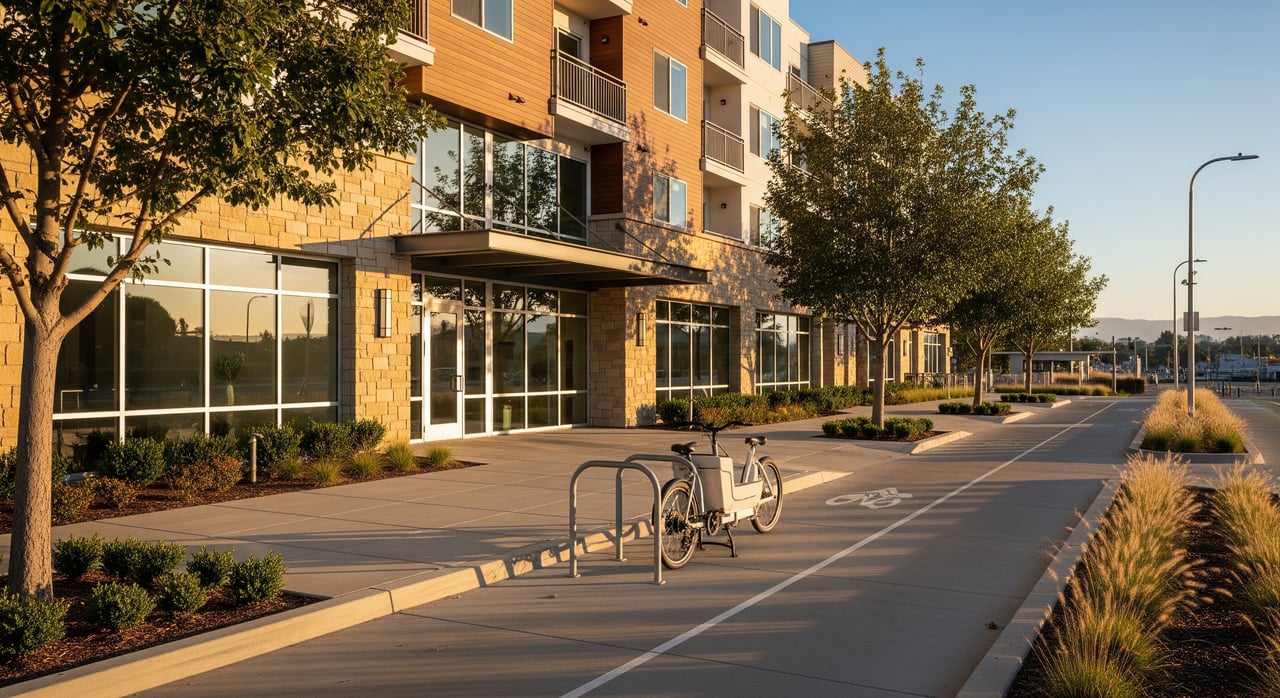
What if you could do most of your Mountain View life on foot, bike, or transit and keep the car for only the big stuff? Many residents want the freedom to skip traffic without giving up flexibility. If that sounds like you, this guide shows where car-light living truly works in Mountain View, what to look for at the block level, and how to plan daily routines with confidence. Let’s dive in.
What car-light living means here
Car-light means you minimize car ownership and driving but still use a car occasionally. You rely on walking, biking, Caltrain, local buses, employer shuttles, and shared mobility for most trips. In Mountain View, this is realistic in select neighborhoods because you have a compact, mixed-use downtown, regional rail, strong job centers, and a mild climate that supports year-round biking and walking.
To evaluate feasibility at an address, focus on indicators like Walk Score, Transit Score, and Bike Score. Check how close you are to Caltrain or a frequent bus corridor. Map the distance to a full-service grocery, pharmacy, healthcare, parks, and childcare. Look for connected, low-stress bike routes that match your comfort level. Finally, review parking rules and costs so you can weigh the real savings from owning fewer cars.
Your transit and mobility toolkit
Caltrain as your backbone
The Mountain View Caltrain station anchors non-car commuting between San Jose and San Francisco. For many residents, Caltrain is the core of a reliable car-light commute. You can also connect to other regional services, though some East Bay trips require transfers, so smart trip planning helps.
Buses and local connections
Santa Clara Valley Transportation Authority (VTA) bus routes link Mountain View to nearby hubs like Sunnyvale and San Jose. Frequency varies by line and time of day. If you plan to ride often, prioritize proximity to routes with higher frequency and timed transfers near transit hubs.
Employer shuttles for first/last mile
Large Mountain View employers run private commuter shuttles and first/last-mile services. If your company offers a shuttle, you can often live near a stop and avoid daily driving. These services are typically restricted to employees, so confirm eligibility and schedules before you count on them.
Bike network and bike-share
The Stevens Creek Trail, shoreline paths, and on-street bike lanes make many local trips practical on two wheels. Bike-share and dockless e-scooter or e-bike options add flexibility for short hops and first/last mile to transit. Caltrain has bike cars and many buses have racks, so mixed-mode trips are common. Always check current policies and capacity, especially at peak times.
On-demand and microtransit pilots
VTA and local partners have tested on-demand connectors to fill gaps. Availability can change, so review current pilots and coverage. These services can be helpful if you are just outside a frequent transit corridor.
Practical implications
Peak-hour frequency and capacity shape your experience. Schedules that match your work hours matter. Secure bike parking at stations and buildings is essential for smooth connections. If you depend on an employer shuttle, plan a backup for off-peak trips or changes in work routines.
Where car-light living works best
Car-light living in Mountain View depends on block-level access to transit, trails, and daily amenities. These neighborhood profiles can help you focus your search.
Downtown and Castro Street
Downtown offers the highest walkability with restaurants, services, the library, and everyday retail in a compact area. You are close to the Caltrain station, so regional trips are simpler. Housing includes walk-up apartments and newer condos that suit buyers and renters who want errands and dining within a quick walk.
Trade-offs include higher prices per square foot and limited on-site parking in some buildings. If you value a lively street scene and minimal driving, this area is a strong candidate.
Near Caltrain, Old Mountain View, and Whisman
Blocks near the Mountain View Caltrain station balance transit access with a variety of housing types, from townhomes to mid-rise apartments. This cluster works well for Caltrain commuters heading to Silicon Valley or San Francisco job centers. Many residents use bikes or micromobility for first/last-mile trips.
Peak-hour trains can be crowded, so test your route at commute times. Your workplace’s distance to a station or shuttle stop will shape your day-to-day convenience.
North Bayshore and Shoreline
North Bayshore is a major employment area with growing mixed-use development guided by the City’s planning framework. Newer projects aim to improve walkability and add on-site retail. Frequent employer shuttles help many workers commute without a private car.
Historically this was an office-focused district with fewer neighborhood amenities. If you live here, you may rely on on-site services, shuttles, and nearby trails for daily needs as more retail and housing phases come online.
Waverly Park and Cuesta Park adjacencies
These residential areas have nearby parks and pockets of neighborhood retail that support some trips by foot or bike. The setting feels quieter than Downtown, and blocks vary in walk and transit access. If you want a more traditional residential environment with access to local services, map your most frequent trips carefully.
Transit frequency is more limited than the core, so families and multi-errand days often benefit from occasional car use. Look for safe bike routes that connect to the trail network and El Camino Real services.
Peripheral single-family areas
On the city’s fringes, you may find lower cost per square foot relative to core locations and a calmer residential feel. That said, distances to groceries, childcare, and transit are typically longer. Without protected bike lanes on key connectors, car-light living becomes harder.
If you choose these areas, plan to combine biking with transit where possible and budget for ride-hail, rentals, or carshare for bigger errands.
Plan your day without a car
Commutes that work well
- Caltrain commuter: Live within biking distance of the station or near a reliable feeder bus or shuttle. Use secure bike parking or bring your bike onboard, depending on capacity.
- Shuttle commuter: If your employer runs a shuttle, choose housing near a stop or live within walking distance of North Bayshore or Shoreline offices.
- Short-trip local worker: If you live and work Downtown or in North Bayshore, most daily trips are walkable or a short bike ride.
Before you commit, verify rush-hour schedules and any caps on bike capacity. Check that your last-mile routes feel safe and convenient for your comfort level.
Errands and appointments
Downtown and El Camino Real corridors support frequent grocery and pharmacy trips on foot or by bike. For bulky items or big-box runs, many households use carshare, ride-hail, or an occasional rental. Grocery delivery and cargo e-bikes or trailers are common solutions.
Healthcare and specialty clinics are reachable by transit in many cases. Still, you may prefer a car for time-sensitive or multi-stop days. Build in options so you are not stuck when schedules shift.
School, childcare, and activities
Car-light living can work with kids if you plan around proximity to childcare, parks, activities, and known school travel routes. Stroller-friendly sidewalks and protected bike connections to after-school programs can make a big difference. Expect to use a car occasionally for complex days and cross-town activities.
Recreation and leisure
Stevens Creek Trail, Shoreline Park, and Castro Street dining are popular for low-car weekends. Many central neighborhoods can reach these by foot or bike. E-bikes stretch your range for longer evening rides and park trips.
Costs, trade-offs, and access
Living closer to Downtown or Caltrain often costs more. Weigh that premium against the savings from owning fewer cars, including insurance, maintenance, parking, and fuel. Some buildings have limited parking or resident-permit rules, so confirm guest policies and storage options if you keep a car.
If you rely on an employer shuttle, remember that it can change with company policy. Public transit frequency and peak-hour crowding can also affect comfort. Gaps in protected bike lanes or challenging crossings may deter less-confident riders, so review the City’s bicycle and pedestrian plans for routes and improvements that matter to you.
For accessibility needs, confirm curb cuts, elevators, and stop accessibility along your most common paths. A short scouting trip at rush hour can reveal more than a map.
Address-level checklist
Use this quick checklist to evaluate any listing for car-light feasibility:
- Walk Score, Transit Score, and Bike Score for the exact block.
- Walking distance to a full-service grocery, ideally within three-quarters of a mile.
- Proximity to frequent transit, such as Caltrain or a bus with short headways during commute hours.
- Secure bike parking or in-unit storage that fits your bike, cargo bike, or stroller.
- Low-stress bike lanes that connect to the Mountain View Caltrain station, Stevens Creek Trail, and your key destinations.
- Nearby employer shuttle stops if you are eligible.
- Availability of bike-share and scooter options within a comfortable walk.
- Resident parking rules, guest policies, and costs if you will keep a car.
Housing matches by lifestyle
- Singles and couples: Mid-rise condos or apartments near Castro Street or the Caltrain station give you the strongest walk and transit access.
- Caltrain or shuttle commuters: Townhomes or apartments within easy bike distance of the station or near a reliable shuttle stop balance space with access.
- Households with kids: Homes within walking distance of parks, childcare, and everyday retail reduce car trips. Plan for occasional car use unless you commit to coordinated multi-modal routines.
How The Grail Group helps you go car-light
If you want a car-light lifestyle, the right address matters more than a broad ZIP code. You need a block-by-block evaluation of transit frequency, employer shuttle access, bike routes, and daily amenities. You also need to weigh higher core-area pricing against the real savings from owning fewer vehicles.
As a boutique, founder-led advisory, we help you analyze these trade-offs with precision. We map typical daily trips, check building bike storage and parking policies, and identify listings near the routes and services you will use most. Whether you are targeting a Castro Street condo, a Caltrain-adjacent townhome, or a new North Bayshore residence, we guide you to options that fit your routines and long-term plans.
Ready to find a Mountain View home or Silicon Valley Land that would support your lifestyle and is close to transit? Connect with The Grail Group for a private consultation and an address-level plan.
FAQs
Is it realistic to live car-free in Mountain View?
- Yes for many singles and couples near Downtown, Caltrain, or new North Bayshore housing when jobs are reachable by rail, transit, or employer shuttle; households with complex schedules often prefer car-light over fully car-free.
Which Mountain View neighborhoods best support car-light living?
- Downtown and Castro Street, areas near the Mountain View Caltrain station including Old Mountain View and Whisman, and parts of North Bayshore with shuttle access are the strongest candidates.
How do you handle bulky errands without a car?
- Use bike trailers or cargo e-bikes, schedule grocery delivery, or book occasional carshare or ride-hail for furniture and bulk shopping days.
Are e-bikes worth it for Mountain View commutes?
- E-bikes expand your comfortable riding range and reduce time and effort for 5 to 10 mile trips, which makes combining cycling with Caltrain or buses more practical.
How will planned growth change car-light options in Mountain View?
- The City’s North Bayshore and downtown planning aims to add housing and improve active-transportation infrastructure, which should create more car-light opportunities while increasing demand on streets and transit over time.
