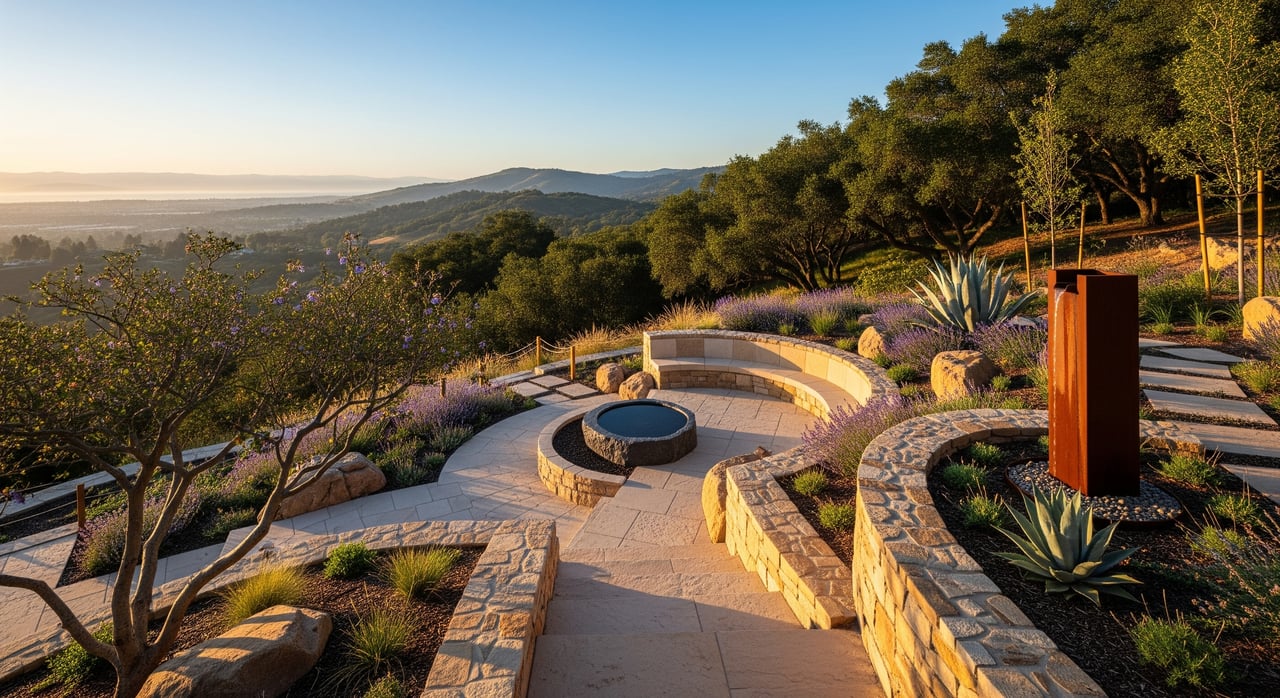
Tired of watching your irrigation run while the summer fog skips your ridge and the sun bakes your slope? You are not alone. In Los Altos Hills, water cycles, microclimates, and wildfire rules can make landscape decisions feel complex. This guide shows you how to design a drought-smart estate that looks beautiful, saves water, and supports fire safety. You will get clear ideas for plants, irrigation, grading, and maintenance you can put to work right away. Let’s dive in.
Why drought-smart matters here
Los Altos Hills sits in a Mediterranean climate with cool, wet winters and warm, dry summers. Drought cycles are normal, and outdoor water use is often the first place agencies ask you to cut. Many properties include slopes and mixed exposures, so conditions vary from one side of a parcel to another. The area is also in a wildland-urban interface, so landscaping must support defensible space and vegetation management.
Start with your site
Map microclimates and shade
Walk your property and note where you get afternoon sun, coastal breezes, and pockets of cool air. North-facing slopes and ridge tops often stay cooler and moister, while south-facing slopes heat up and dry out. Group plants that prefer similar light and temperature patterns so you water efficiently.
Know your soil and drainage
Foothill soils can be shallow or rocky. Add compost and organic matter during planting to improve water holding capacity and root health. Watch how stormwater moves on-site and plan for infiltration rather than runoff to reduce erosion and support recharge.
Plan for slopes and erosion
On steeper areas, consider terraces, retaining elements, and rockwork to slow water and stabilize soil. Permeable paving, decomposed granite paths, and gravel landings reduce runoff and keep surfaces usable after rain. Bioswales or rain gardens can catch and infiltrate water downslope from roof and driveway flows.
Design blueprint: use less water beautifully
Hydrozoning for control
Create zones by water need: high near the house and utility areas, moderate for accent beds, and low for outer zones. Separate zones make it easy to dial irrigation up or down as seasons change. Keep high-need plants near where you live and entertain to get the most visual impact per gallon.
Rethink lawns
Reduce or remove nonfunctional turf. Replace with native meadow mixes, low-water groundcovers, or permeable hardscape for sitting, play, or pet areas. On slopes, switch to drought-tolerant groundcovers or native bunchgrasses for stabilization and a refined look.
Use shade to cut demand
Strategically placed trees create microclimates that reduce evaporation and plant stress. Shade patios and west exposures to ease afternoon heat and lower irrigation needs nearby.
Plant palette that thrives in Los Altos Hills
Choose California natives and Mediterranean-climate species that tolerate summer-dry conditions after establishment. Mix canopy, structure, and seasonal color for a layered, estate-worthy look.
- Trees: Coast live oak (Quercus agrifolia), Western redbud (Cercis occidentalis), California buckeye (Aesculus californica), and Toyon (Heteromeles arbutifolia) for evergreen presence and habitat value.
- Large shrubs: Manzanita (Arctostaphylos spp.), Ceanothus, California coffeeberry (Frangula/Rhamnus californica), and Coyote brush (Baccharis pilularis) for structure and slope coverage.
- Perennials and subshrubs: California fuchsia (Epilobium), native sages (Salvia spp.), penstemons, buckwheats (Eriogonum), gaura, and Mediterranean herbs like lavender and rosemary for long-season interest.
- Succulents and accents: Agave, Aeonium, Dudleya, and sedums bring sculptural form in rock gardens and gravel beds.
- Groundcovers and grasses: Dymondia, native bunchgrasses, and other low-water groundcovers for pathways, borders, and erosion control.
Avoid invasive or high-water plants that conflict with local fire safety or maintenance goals. Always match species to your specific slope, soil depth, and exposure.
Capture and store every drop
Large rooflines and long driveways offer big opportunities to slow and use water on-site.
- Add roof-to-cistern systems where feasible, planning for tank location, screened inlets, and overflow routing.
- Direct downspouts to bioswales or rain gardens to spread and sink water into the soil.
- Use permeable pavers, gravel bands, and decomposed granite to boost infiltration and reduce runoff.
- On long slopes, break up flows with terraces, check dams, and planted bands.
Before building, confirm local permitting for grading, tanks, and drainage with the Town of Los Altos Hills and Santa Clara County. Program details and rules change, so always verify current requirements.
Irrigation that works smarter
Switch shrub and bed areas from overhead sprinklers to drip or micro-spray with filtration and pressure regulation. Set separate zones for trees, shrubs, establishment areas, and any remaining turf. Smart controllers and soil moisture sensors help prevent overwatering and can adjust for weather.
- Review schedules seasonally and reduce runtime as plants establish.
- Place valves and filters where you can reach them for flushing and maintenance.
- Water deeply and less often to promote deep rooting and drought resilience.
Build soil, lock in moisture
Healthy soil cuts water demand.
- Incorporate compost during planting to improve structure and water retention.
- Apply 2 to 4 inches of organic mulch around beds to reduce evaporation and suppress weeds. Keep mulch a few inches away from trunks and stems.
- After establishment, shift to deeper, less frequent irrigation for stronger plants.
Fire-smart and drought-smart together
In the wildland-urban interface, landscape choices should support defensible space while staying water-wise. Use low-flammability plants near structures and avoid dense, unpruned masses next to buildings. Maintain green, well-spaced plants in the inner zone and remove deadwood and debris regularly.
Consult CalFire guidance and local fire rules for plant spacing and maintenance around structures. Coordinate your design with defensible space zones so beauty, water savings, and safety work together.
Greywater and rainwater reuse basics
California allows certain residential greywater systems when they meet plumbing code requirements. Laundry-to-landscape systems are popular and can reduce potable water use for trees and ornamentals. Keep greywater away from edible plant parts, and make sure systems have the right filters and diverters.
Rainwater catchment can supplement irrigation for many months, especially on large estates with ample roof area. Match cistern size to your roof, rainfall patterns, and irrigation goals. Always confirm current local permitting and code.
Phase your project for impact
On large properties, a phased plan keeps budgets predictable and delivers quick wins.
- Target water hogs first. Remove or reduce nonessential turf and swap annual-heavy beds for low-water plantings.
- Upgrade irrigation and add smart controls. Fix the plumbing backbone before you invest in new plants.
- Improve soil and plant in the cool season. Fall and early winter planting helps roots establish with seasonal rains.
- Tackle slopes and perimeter areas next. Integrate erosion control, swales, and groundcovers as you expand.
Maintenance for lasting results
Set a seasonal irrigation schedule and check emitters, filters, and valves at least once a year. Prune for plant health and fire safety, removing dead material and ladder fuels. Watch for pests or unintended spread and adjust irrigation to avoid encouraging invasives.
Track savings and value
Install a submeter or track the main meter to compare outdoor water use before and after your project. Consider an irrigation audit to fine-tune runtimes and distribution so you realize projected savings. Expect most natives to need establishment watering for one to two years, then less over time.
Many buyers in California appreciate low-maintenance, water-efficient landscapes. A well-designed, drought-smart yard that adds curb appeal and usable outdoor living can be value-positive. Local preferences vary, so talk with a trusted real estate advisor about your specific goals.
Work with the right pros
For design and build, look for teams experienced in Bay Area water-efficient and native landscaping, and familiar with local soils and fire requirements. Helpful credentials include:
- Bay-Friendly Rated Landscape Professional
- Licensed Landscape Architect for complex grading and retaining walls
- Irrigation auditing certifications and WaterSense-labeled irrigation professionals
For rainwater, greywater, and cisterns, verify plumbing and contracting licenses and local permitting experience. Ask for examples on sloped, multi-acre properties similar to yours.
Ready to align beauty, safety, and water savings on your estate? Reach out to The Grail Group for local guidance on what upgrades will support your long-term goals, budget, and resale strategy. Get white-glove advice that coordinates design choices with your property’s microclimate and market position.
The Grail Group can connect you with trusted designers and contractors, help you prioritize improvements, and advise on how landscape choices intersect with home value. Let’s plan a landscape that works as hard as your home.
FAQs
What drought-smart steps make the biggest impact in Los Altos Hills?
- Start by reducing nonfunctional turf, converting beds to drip irrigation, and adding 2 to 4 inches of mulch, then add rain capture or swales to keep water on-site.
Which native plants are good for estates with slopes?
- Manzanita, Ceanothus, California coffeeberry, Coyote brush, native bunchgrasses, and buckwheats provide structure, erosion control, and low-water performance.
How do I balance wildfire defensible space with drought savings?
- Keep low-flammability, well-spaced plants near structures, remove dead material, and use drip irrigation to maintain healthy green belts in the inner zone.
Are greywater systems legal in California for landscape use?
- Yes, when designed to meet the California Plumbing Code and local permits; laundry-to-landscape is common for trees and ornamentals, not edible plant parts.
When is the best time to plant a drought-tolerant landscape?
- Plant in fall or early winter so roots establish with seasonal rains, lowering first-year irrigation needs and improving survival.
Do I need permits for cisterns or grading on my property?
- Many drainage, grading, and tank installations require permits; confirm current requirements with the Town of Los Altos Hills and Santa Clara County before you build.
Will removing lawn hurt my home’s resale value?
- Buyers increasingly value low-maintenance, water-wise yards; when designed well, lawn reductions paired with usable outdoor spaces can support value.
