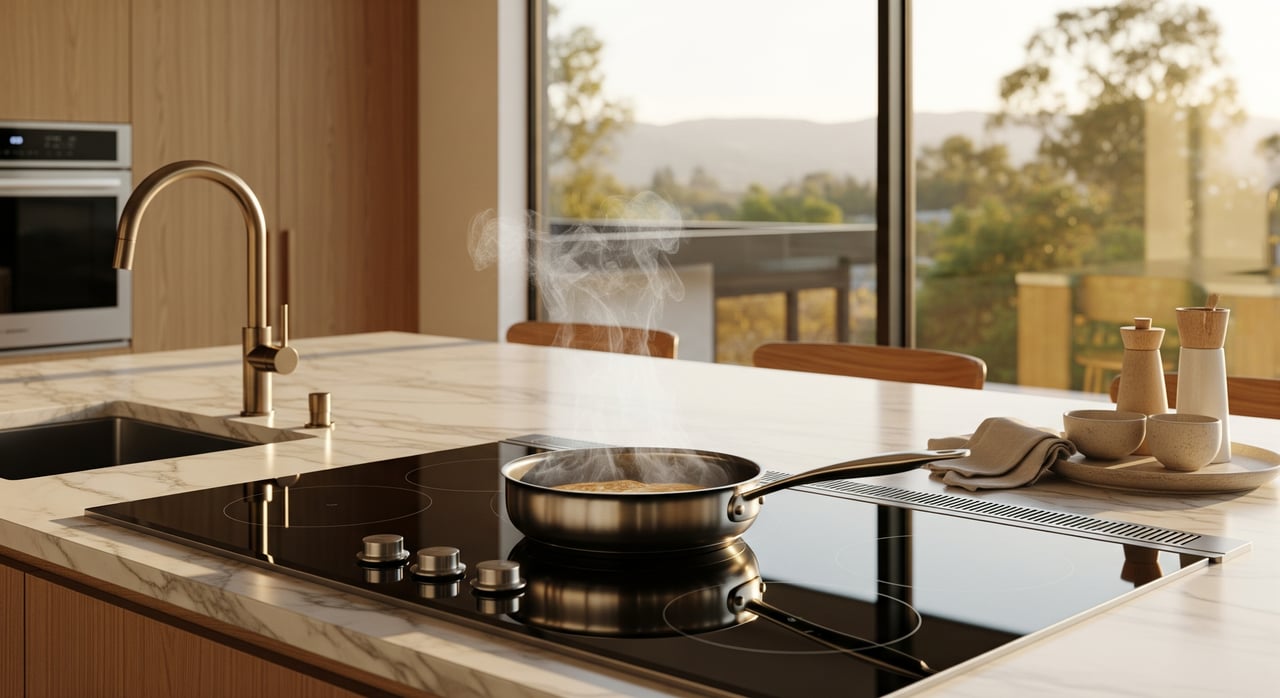
Thinking about switching from gas to induction while you remodel your Mountain View kitchen? You are not alone. Many Peninsula homeowners want cleaner indoor air and modern control without sacrificing cooking performance. In this guide, you will learn how induction compares to gas in real life, what to plan for with electrical and ventilation, and where to check local resources so your project stays on schedule and on budget. Let’s dive in.
Why induction wins in real kitchens
Induction heats your cookware directly using magnetic fields, so the pan gets hot fast while the glass surface around it stays relatively cool. In everyday cooking, you get the speed, responsiveness, and fine control you expect from gas, often with lower heat spilling into the room.
- Power and speed: Many induction zones deliver strong continuous power and a temporary boost mode for rapid boiling. This often beats typical gas burners for time to boil and recovery.
- Instant response: When you adjust the setting, heat output changes quickly. That helps with precise simmering and delicate sauces.
- Low-heat precision: Digital power levels and some thermostatic options make it easier to maintain steady, gentle heat than with a flame.
- Searing: High‑power zones with a good flat pan (cast iron works well) produce excellent sears. Ultra‑high surface temps from certain pro gas ranges can be harder to match, but most home searing needs are covered.
- Specialty cookware: Round‑bottom wok cooking over a high flame is a classic gas strong suit. You can still stir‑fry with a flat‑bottom wok or an induction wok element, but technique and pan geometry matter.
Safety and indoor air quality
Because induction does not burn fuel, it removes a major source of indoor combustion pollutants. Households concerned about nitrogen dioxide or carbon monoxide often choose induction for this reason. The surface tends to be cooler and many models include automatic shutoff if there is no pan detected, plus child‑locks.
You still need effective ventilation. Cooking produces grease, particulates, and moisture regardless of the heat source. A properly sized hood keeps your kitchen comfortable and clean.
Cookware compatibility made simple
If a magnet sticks to the bottom of your pan, it likely works with induction. Most cast iron and many stainless steel pans are compatible. Aluminum or copper without a magnetic base will not work unless you use an induction interface disk. Many homeowners keep the pans they love and add a few induction‑optimized pieces for best results.
Plan your Mountain View remodel electrical
The cleanest induction upgrade starts with a clear plan for power. Before you commit to cabinet openings or countertop cutouts, confirm what your panel and wiring can support. This will help you avoid rework later and keep your inspections smooth.
Check panel capacity
- Find your main service size (100A, 150A, or 200A are common) and see how many breaker spaces remain.
- Consider future loads, such as an EV charger, heat pump water heater, heat pump HVAC, or a heat pump dryer. Planning for multiple new circuits up front prevents a series of small surprises.
- Ask a licensed California electrician to perform a load calculation based on the National Electrical Code and local amendments so you get a precise answer before you order appliances.
Know typical circuit requirements
- Most built‑in induction cooktops and electric ranges need a dedicated 240V circuit.
- Many cooktops call for a 40A two‑pole breaker. Electricians commonly run 8 AWG copper conductors for this.
- Some high‑power models require 50A or higher circuits, often with 6 AWG copper.
- Portable countertop induction units run on 120V. They are handy during a remodel but are not a full replacement for a built‑in cooktop.
Panel upgrades and alternatives
If your panel is short on space or total capacity, you still have options. Depending on your load calculation, you might:
- Add a double‑pole breaker for the cooktop if capacity allows.
- Install a subpanel if the main panel can support an additional feeder.
- Upgrade the main service from, for example, 100A to 200A if your planned loads require it.
Any of these steps should be evaluated and performed by a licensed electrician, with permits and inspections handled through the City of Mountain View Building Division.
Pre‑wire during demolition
Remodels run smoother when you plan the path of power early.
- During demolition and framing, run conduit or leave a chase from the panel to the cooktop location to simplify future pulls.
- Confirm the exact appliance model and follow the manufacturer’s clearance and junction box guidance. Make sure connections remain accessible after installation.
- Place the cooktop where wiring runs are shortest to reduce material and labor.
- Consider oversizing or adding empty conduit to future‑proof for additional circuits, such as a downdraft unit or an appliance relocation.
- Clearly label the new circuit in your panel for future service and resale.
Permits and inspections
In California, adding a 240V circuit or upgrading service requires a permit and inspection. If you are moving wiring or removing a gas line as part of a larger kitchen remodel, expect additional permit steps. Build these reviews into your timeline so delivery and installation do not outpace approvals.
Coordinate trades early
Share your final appliance spec sheets with your electrician, cabinetmaker, countertop fabricator, and hood installer as soon as you choose them. Power locations, cutouts, and vent penetrations are sensitive to the exact model. If you are removing gas, have a licensed plumber cap the line per code and keep access available as required by the City.
Ventilation that fits your cooking
Induction still needs a vented hood. Size it to your cooking style and the hood manufacturer’s guidance. Many homes do well with 300 to 600 CFM. If you cook high‑heat stir‑fries or deep fry often, you may prefer a higher‑capacity unit.
- Plan the duct path and roof or wall cap during framing.
- Provide a dedicated circuit for the hood and confirm clearances before the cabinets go in.
- Downdraft systems can work in certain layouts. They are usually less effective than a good overhead hood, but induction’s lower ambient heat can make them acceptable for light to moderate cooking.
Local resources to check before you buy
Incentives, code requirements, and rate plans change often. Before you order your cooktop or start electrical work, review current guidance from these sources:
- City of Mountain View Building Division for permits, inspection steps, and kitchen remodel requirements.
- City sustainability or climate action pages for local electrification goals and possible programs.
- Your electricity provider for current residential rates and any appliance incentives, plus approved contractor lists.
- Your Community Choice Aggregator for cleaner energy options and potential separate incentives.
- Bay Area Regional Energy Network for home electrification guidance and contractor directories.
- California Energy Commission and California Public Utilities Commission for statewide programs, code updates, and appliance guidance.
- California Air Resources Board for health and indoor air information related to combustion appliances.
- Federal Inflation Reduction Act resources for tax credits and rebate programs that may apply to home electrification.
Verify your home’s specific utility and CCA, eligibility rules, and application steps. Program details can shift, so check these sources close to purchase and permit time.
Remodel checklist: the smoothest path
Use this quick checklist to keep your project on track from design to inspection.
- Choose your appliance
- Decide on a slide‑in range, a separate cooktop with wall ovens, or a range with downdraft.
- Select the exact model so you can lock in cutouts, power requirements, and clearances.
- Get an electrician’s load calc
- Have a licensed electrician confirm panel capacity, breaker size, and wire gauge.
- Decide whether to add a circuit, install a subpanel, or plan a service upgrade.
- Pull permits
- File for the necessary electrical and kitchen permits with the City of Mountain View.
- Schedule inspections to match your construction sequence.
- Rough‑in power and ventilation
- Run conduit or cables and set the junction box during framing.
- Lay out ducting and install the hood rough‑in while walls are open.
- Install appliances
- Coordinate delivery times and have the electrician make final connections.
- Confirm manufacturer clearances and accessibility for service.
- Final inspection
- Close out permits and update your panel directory for the new circuit.
- Keep documentation for your records and future resale.
Design tips for a sleek fit
Induction pairs well with modern, minimalist kitchens. The thin glass surface sits nearly flush with stone or quartz and keeps sightlines clean. When you select your cooktop, consider control placement and how it affects drawer space below. Share cut sheets with your fabricator early so the edge profile and reinforcement plan match your installation type.
Cost and resale considerations
Induction is efficient at the cooktop and often faster than gas, so energy for a given task can be similar or lower. Your overall cost to operate depends on your utility’s electricity and gas rates and how you cook. Reviewing your current rate plan and cooking habits will give you a realistic picture.
For resale, many Bay Area buyers value electrified homes and clean‑energy appliances. Preferences still vary by household. Keep your permit records, the electrician’s load calculation, and any program paperwork. Clear documentation supports buyer confidence during disclosure.
The bottom line
You can get clean, precise cooking without giving up control. With a solid electrical plan, a right‑sized hood, and early coordination during your Mountain View remodel, induction can be a smooth upgrade that adds everyday comfort and long‑term appeal.
Ready to align your remodel plans with your broader real estate goals in Mountain View? The Grail Group can help you weigh options that protect value and market appeal, from smart pre‑market upgrades to timing your sale or purchase around construction milestones. Get an instant property valuation and private consultation.
FAQs
Do I need a full panel upgrade for induction?
- Not always. Many homes can add a 40A 240V circuit without a service upgrade. A licensed electrician’s load calculation will confirm whether you need a subpanel or a full service increase.
How disruptive is adding a 240V cooktop circuit?
- If there is a clear path from the panel to the cooktop location, adding a dedicated circuit is usually straightforward. Plan it during demolition to minimize patching and avoid delays.
Which pots and pans work on induction?
- Most cast iron and many stainless steel pans with magnetic bases work. If a magnet sticks to the bottom, you are good. Aluminum or copper needs a ferromagnetic layer or a compatible disk.
What should I do about ventilation with induction?
- You still need a vented hood sized to your cooking. Many homes use 300 to 600 CFM. Heavy frying or high‑heat stir‑frying may call for a higher‑capacity unit confirmed by the manufacturer’s guidance.
Will induction raise my energy bills compared to gas?
- Induction is efficient and quick, so per‑task energy use can be similar or lower than gas. Your total cost depends on your electricity and gas rates and how often you cook. Review your utility’s current rate plans to estimate.
