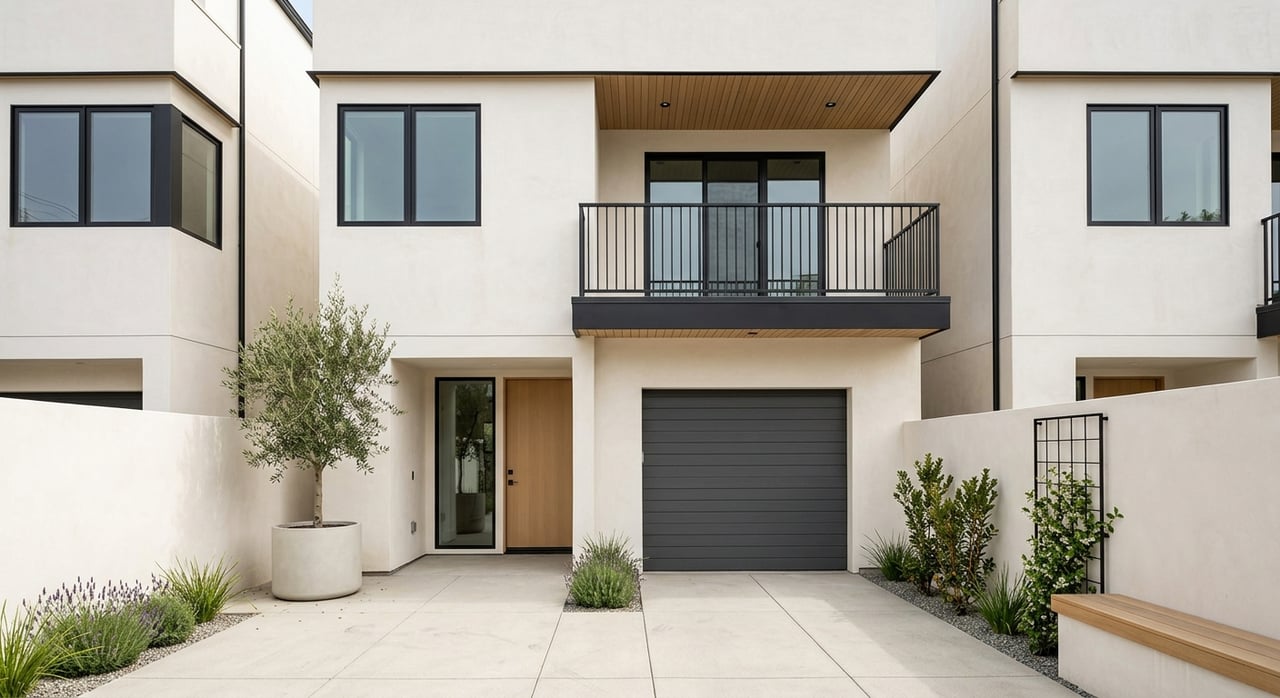
Craving more space than a condo but less upkeep than a single-family home? If you live or work in San Jose, a townhome might be the sweet spot. You want a comfortable layout, manageable maintenance, and a location that keeps your commute and weekend plans simple. This guide helps you decide if a townhome fits your lifestyle, step by step.
You’ll learn what a townhome means in California, how HOAs and disclosures work, what to expect with financing and insurance, and how commute and neighborhood choices affect your day to day. You’ll also get a fast decision checklist and next steps. Let’s dive in.
What a San Jose townhome is
In everyday use, a townhome is a multi-level, attached home with at least one shared wall, a private entrance, and often an attached garage. In California, the bigger distinction is how it is legally organized. Many attached homes are part of a common interest development under the Davis–Stirling Act. That structure determines HOA duties, what documents you receive during escrow, and sometimes how lenders treat the property.
The California Department of Real Estate’s buyer guide explains how condominium projects and planned developments work, what HOAs must disclose, and what you should review before you buy. You can skim the state’s overview in the DRE guide to residential subdivisions and associations to understand the basics of common areas, budgets, and rules. You’ll find that summary in the state’s resource, A Guide to Understanding Residential Subdivisions in California. (DRE buyer/HOA guidance)
If you plan to use FHA or other government-backed financing, the property’s classification matters. Some fee-simple or “site condominium” townhomes can be treated like single-family for FHA, while stacked condo projects usually need project-level approval. Your lender confirms this during preapproval. You can see FHA’s site-condo definition in the handbook glossary. (FHA Handbook 4000.1 glossary)
Layout and space trade-offs
Townhomes in San Jose are commonly two to three stories. Many place the garage on the lower level, living and kitchen on the middle or top floor, and bedrooms upstairs. Newer infill communities often offer open-plan living areas, small patios, and occasionally a rooftop deck. End units may enjoy more natural light and a bit of extra outdoor space.
Compared with a detached single-family home, you usually trade a large private yard for lower exterior maintenance and a closer-in location. Compared with a condo, a townhome often gives you a private entry, a bit of ground-level outdoor space, and direct garage access, with fewer neighbors above or below. The right choice comes down to how you use space and how much maintenance you want to handle.
HOA duties and disclosures
Most San Jose townhomes sit within an HOA that manages common elements and sets community rules. California law requires associations to prepare and share an annual budget report and a reserve summary. These documents help you gauge whether the HOA is saving appropriately for big-ticket items like roofs, siding, pool equipment, and paving.
- The annual budget report and related notices must be prepared and delivered on a set schedule. You can read the statutory timing and content in Civil Code Section 5300. (Civil Code §5300)
- The reserve summary must include estimated remaining life, replacement costs, and the percent-funded figure. This is your quick health check for reserves. Find the exact list in Civil Code Section 5565. (Civil Code §5565)
- Reserve planning best practice in California includes a full visual reserve study every three years, with annual funding review. Recent laws also require inspections of elevated exterior elements that can affect reserves in older properties. (California reserve-study overview)
What dues often cover
Monthly HOA dues vary by age, size, and amenities. Coverage can include exterior maintenance, roof and common-area insurance, landscaping, trash, and management. Owners typically handle interior systems, appliances, and finishes, but your CC&Rs control the final answer. When comparing communities, focus on reserve strength, recent special assessments, and any big projects planned.
Review these documents
Ask for and read:
- CC&Rs, bylaws, rules and regulations
- Current budget, last 12–24 months of financials
- Reserve study and funding plan
- Board meeting minutes for the last year
- Insurance declarations and master policy
- History of special assessments and known projects
- Litigation disclosures
- Parking, pet, and rental rules
Financing, appraisal, insurance
Before you write an offer, confirm with your lender whether the property is underwritten as a condo project or a fee-simple townhouse. It affects loan forms, appraisal requirements, and availability of FHA/VA. FHA’s handbook defines “site condominium” and outlines when project approval is required. (FHA site-condo rules)
Insurance depends on the HOA master policy. If the master policy covers the building exterior and common elements, you will likely carry an HO-6 policy for interior finishes, personal property, liability, and loss-assessment coverage. If the HOA does not insure the structure, you may need broader dwelling coverage more like an HO-3/HO-5. Always verify coverage and deductibles on the association’s declarations page. (HO-6 vs HO-3 overview)
Commute and neighborhood fit
San Jose residents spend about 27.3 minutes on a typical one-way commute, which makes location and transit access real quality-of-life factors. (U.S. Census QuickFacts) If you want to reduce drive time or enjoy more transit options, look at townhome communities near major job centers and transit corridors.
- Downtown and Diridon: Diridon Station is the South Bay’s intermodal hub for Caltrain, Amtrak, ACE, and VTA light rail and buses, with future BART plans shaping long-term access. Townhomes near this area can offer a lower-driving lifestyle for professionals with Peninsula or downtown commutes. (Diridon Station Area Plan)
- North San Jose and Berryessa: Close to tech campuses and VTA light rail. Easy access to US-101 and CA-237 can be a plus if you split time between San Jose and the Peninsula.
- Willow Glen: Near downtown with a neighborhood feel and access to CA-87 and I-280.
- Cambrian and Blossom Valley: Often provide more living space relative to price compared with some core areas, with convenient access to CA-85 and surface routes.
If transit is central to your lifestyle, explore the Santa Clara Valley Transportation Authority for route options, light rail stations, and express bus corridors. (VTA system)
Market position and resale
In many neighborhoods, townhomes are priced between condos and single-family homes. The exact spread depends on location, age, size, and whether a unit is part of a condo project or fee-simple. Demand tends to be strong near job centers and transit. HOA health, reserve funding, and any litigation can affect both buyer interest and lender appetite. For buyers using FHA or VA, project approval or site-condo status can expand or limit the pool. (FHA project considerations)
On the lifestyle side, townhomes often allow flexible interior updates, subject to HOA rules for structural changes and exteriors. Features like a two-car garage, a small outdoor area, and a bedroom that doubles as an office are frequent priorities for professionals and young families.
30-second decision checklist
Use this quick scan to test fit before you tour.
- Priorities and space
- Do you need a private yard, or will a patio and nearby parks work?
- How important is low exterior maintenance to you?
- Commute and transit
- Would living near Diridon, downtown, North San Jose, or Berryessa shorten your commute or improve transit access? (Diridon Station plan)
- HOA tolerance and reserves
- Are you comfortable with monthly dues and the chance of special assessments? Review the annual budget and reserve summary for percent-funded. (Civil Code §5300)
- Financing and appraisal
- Ask your lender early whether the property is treated as a condo project or site-condo/fee-simple townhouse. (FHA site-condo rules)
- Insurance fit
- Get the HOA master policy declarations to confirm whether you need HO-6 or broader dwelling coverage. (HO-6 vs HO-3 overview)
- Noise and shared walls
- Visit during evenings and weekends and check meeting minutes for noise-related complaints.
- Parking and storage
- Verify deeded spaces, guest parking rules, and garage storage options.
- Pets and rentals
- Confirm pet policies and any rental caps in the CC&Rs if future flexibility matters.
How we help you decide
Choosing the right home type in San Jose is as much about lifestyle as it is about numbers. You deserve a clear, low-stress path to an answer. Our approach pairs market perspective with detailed due diligence so you can buy with confidence:
- Strategy session to map your commute, space needs, and budget to the right neighborhoods
- Upfront lender and insurance coordination to clarify financing and coverage
- HOA document review guidance so you understand reserves, rules, and risk
- White-glove touring and offer strategy aligned with your priorities
If you are weighing a townhome against a condo or single-family home, let’s talk through the trade-offs and design a plan that fits your life. Start with an instant property valuation or a private consultation with The Grail Group.
FAQs
Do HOAs prevent big surprise bills in townhomes?
- Not always. Strong reserves reduce risk, but boards can levy special assessments for major repairs. Review the reserve summary and percent-funded figure required by California law. (Civil Code §5565)
Are townhomes noisier than condos or houses?
- It depends on design and placement. Townhomes share side walls, while stacked condos add neighbors above and below. End units can feel quieter, but always visit at busy times to test.
Is financing harder for a San Jose townhome?
- It can be if the unit is part of a condo project with weak financials or without FHA/VA approval. Fee-simple or site-condo townhomes are often underwritten more like single-family homes. Confirm with your lender early. (FHA site-condo rules)
What insurance do I need for a townhome?
- It depends on the HOA’s master policy. If the exterior is insured by the HOA, you likely need HO-6 (walls-in). If not, you may need broader dwelling coverage. Verify using the declarations page. (HO-6 vs HO-3 overview)
How do San Jose commutes compare for townhome areas?
- Townhomes near Diridon, downtown, North San Jose, or along major VTA corridors can reduce drive time for many jobs. San Jose’s average one-way commute is about 27.3 minutes, so location and transit access can make a daily difference. (U.S. Census QuickFacts)
